Our services
At North Shields Vets we bring experience and expertise in both routine and emergency small animal veterinary care. We offer in-house diagnosis, treatment and surgery so your pet can access the care they need in your local vet practice.
Vaccinations
At North Shields Vets we offer a comprehensive vaccination programme for both cats and dogs. Vaccination is an important part of your pets’ preventative health care, protecting then against potentially fatal contagious diseases.
Dogs are routinely vaccinated against Canine Distemper, Hepatitis, Parvovirus, Leptospirosis, Kennel Cough. As well as Rabies if they are travelling abroad.
Puppies are vaccinated from 8 weeks of age and again four weeks later followed by annual boosters of Leptospirosis and Kennel Cough. Then every three years against Distemper, Hepatitis and Parvovirus.
For breeding dogs, it is recommended to vaccinate against canine Canine Herpes Virus to decrease puppy mortality and fading puppy syndrome.
Cats are routinely vaccinated against the highly contagious Cat Flu viruses; Feline Herpes and Calicivirus, Feline Enteritis and Feline Leukemia. As well as Rabies Virus if they are travelling abroad.
Kittens are generally vaccinated from 9 weeks of age then three weeks later, followed by annual boosters.
Dental Care
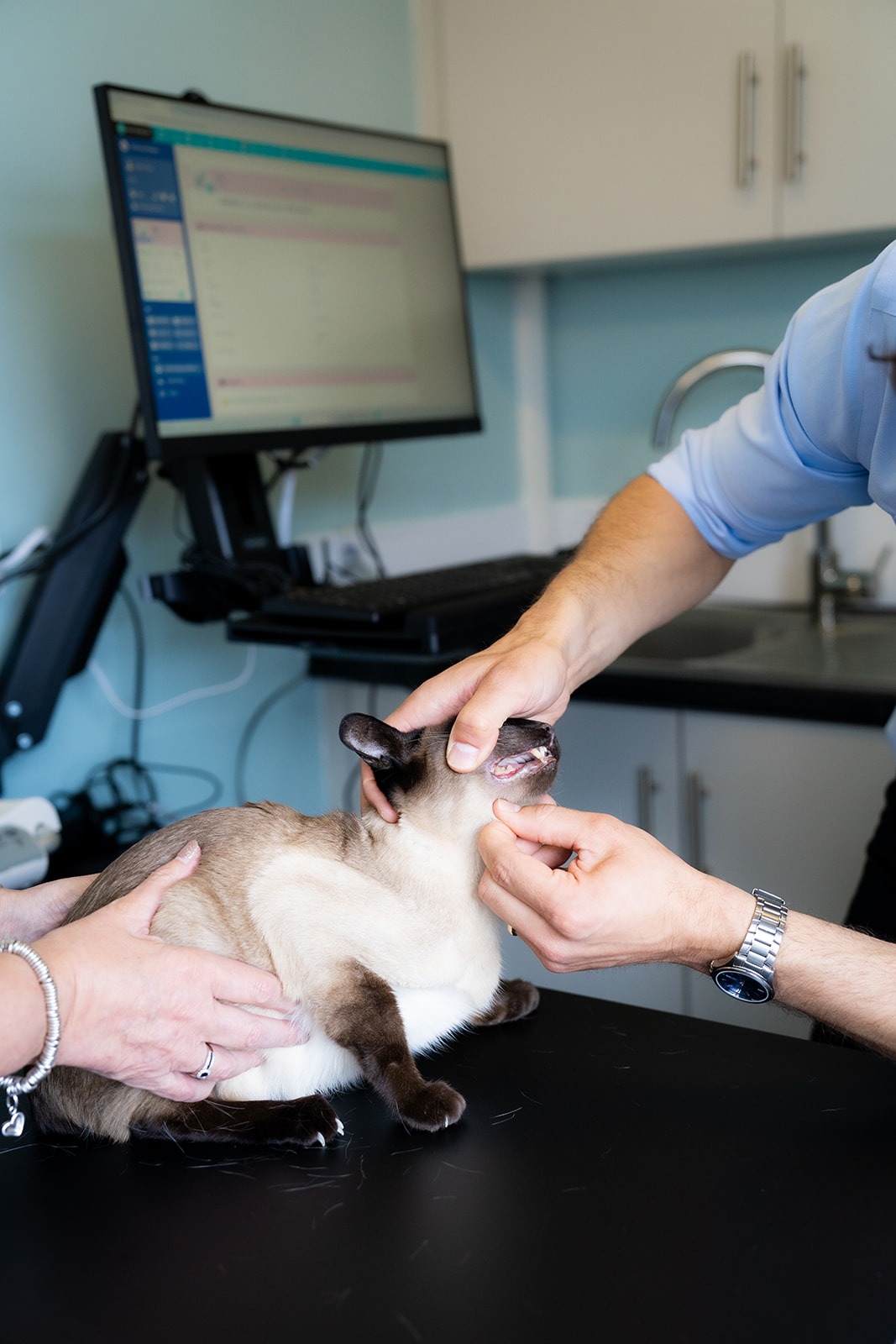
We offer in house dental care including descaling & polishing and dental extractions where necessary which improves their oral hygiene and quality of life. Prior to any dental procedure a thorough clinical examination will be given to assess the level of intervention requires and provide you as owners with as accurate an estimate as possible.
Microchipping
It is a legal requirement for both cats and dogs to be microchipped in the UK. Microchipping ensures that lost pets have as great a chance as possible of being returned to their owners as quickly as possible. It involves the insertion of a very small chip (about the size of a grain of rice) under the skin at the back of their necks and can be administered in consultation.
Neutering
We offer neutering options from surgical to chemical procedures and would be happy to discuss which option feels best for your pet.
For male dogs, it is recommended that they are fully grown and matured before considering castration. There are many advantages to considering castration for your male dog including reducing testosterone and associated confrontational behaviours, the urge to roam and improving health outcomes by reducing prostate problems and testicular cancer.
We also offer the much lower invasive laparoscopic bitch spay option or traditional open spays depending on individual circumstance.
For small breed female dogs you can spay from six months old but for larger breed dogs it is advised you wait until they have had a season. The advantages to spaying your dog include reducing the risk of mammary tumours and eliminating the chance of pyometra, which is a serious and potentially life-threatening condition of the uterus.
Generally cats are spayed from five months old, although you can do this earlier depending on circumstance. Similarly, castration of male cats can be done from four months of age. The benefits mirror those of neutering a dog and support with preventing unwanted pregnancies.
Emergencies
In an emergency please contact us on 01913 034 214
Advice can also be sought from Rob through PetsApp.
Outside of our opening hours your call will be redirected to our 24 hour emergency care provider.
Laparoscopy
Laparoscopy, also known as ‘keyhole’ surgery is a minimally invasive technique for abdominal surgery. At North Shields Vets, we primarily use this technique for spays. It involves making two very small incisions into the abdominal wall and placing an endoscopic camera and additional tools to remove both ovaries. Traditional spays require the veterinary surgeon to make a larger incision in the abdomen.
Research shows that there are no advantages to removing a healthy uterus along with the ovaries. In fact, removing only the ovaries during a laparoscopic spay has been shown to have the same long term health outcomes as an ovariohysterectomy.
The big advantages of a laparoscopic spay are that it is much less painful and significantly reduces the risks associated with a more invasive surgery and increased surgical time as well as really reducing the post op recovery time. Dogs can be off the lead after five days unlike two weeks for the traditional method.